
📌 Key Takeaways: Noble vs. Tudei Kava at a Glance
- The Definitive Safety Distinction: Noble kava (traditionally cultivated Piper methysticum) has thousands of years of safe daily consumption throughout the South Pacific. Tudei kava (pronounced “two-day”) is a wild, non-noble variety notorious for severe nausea, lingering lethargy, and next-day physical exhaustion.
- The Chemotype Fingerprint: Noble cultivars are characterized by chemotypes beginning with 2 (Dihydrokavain) or 4 (Kavain), providing clean, euphoric, and clear-headed muscle relaxation. Tudei kava starts with 5 (Dihydromethysticin) or 254/521, flooding the nervous system with prolonged sedative heaviness.
- Flavokavain B (FKB) Content: Tudei kava contains dangerous concentrations of Flavokavain B, a chalcone compound identified by toxicological researchers as the primary culprit behind liver strain and cellular cytotoxicity in poorly extracted historical supplements. Noble kava contains negligible, safe baseline traces.
- Regulatory Bans: The Vanuatu Kava Act of 2002 and Pacific export standards legally forbid the international commercial export of Tudei kava as drinking kava. Only certified Noble cultivars are authorized for human consumption.
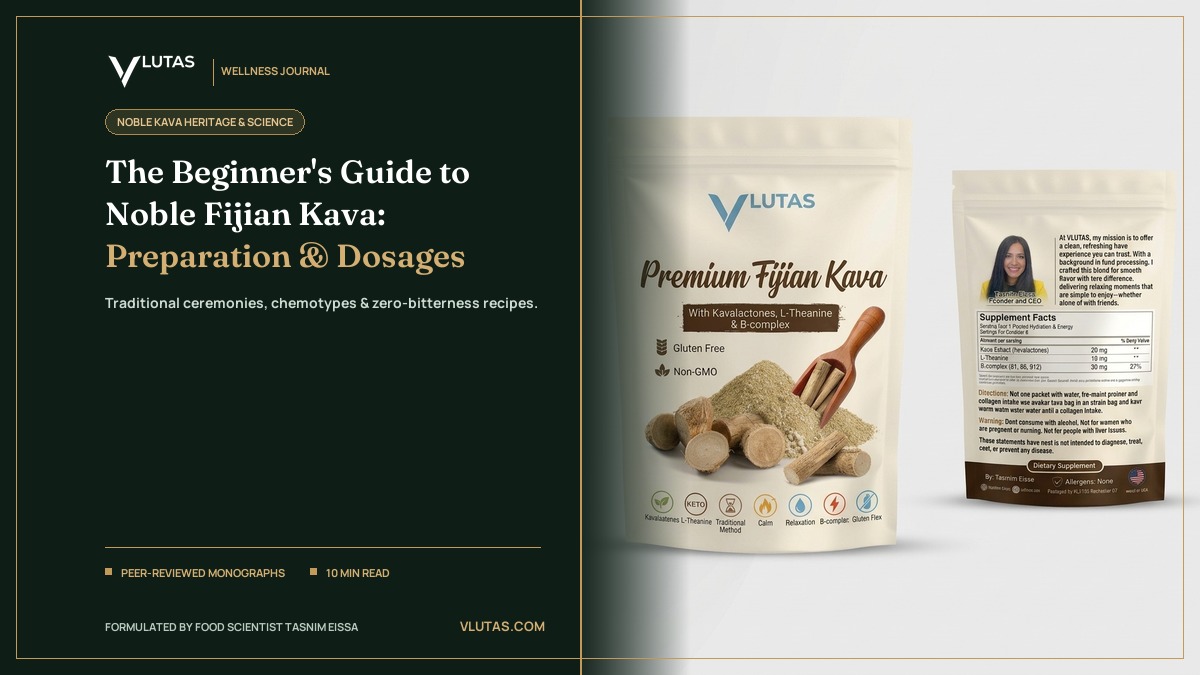
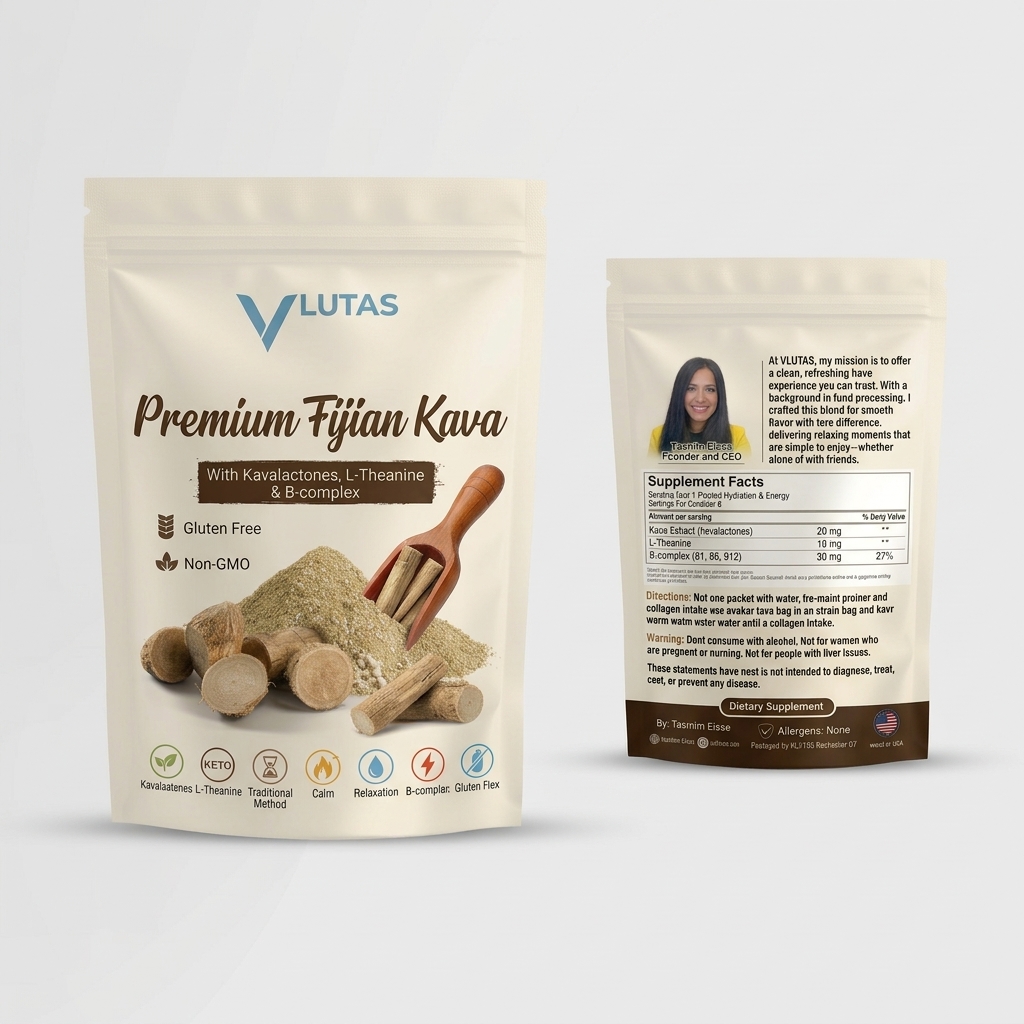
- Purity Guarantee: VLUTAS uses exclusively 100% single-origin, certified Noble Fijian lateral and basal rootstock, verified for zero bitterness and zero Tudei adulteration.
For thousands of years, Pacific Island communities have revered kava (Piper methysticum) not merely as an agricultural crop, but as a sacred communal elixir that fosters social harmony, eases anxiety, and welcomes guests. However, as kava gains global popularity across modern wellness spaces, botanical bars, and functional beverage markets, a critical distinction has emerged that every consumer must understand: the fundamental difference between Noble Kava and Tudei Kava.
While authentic noble kava delivers a serene, uplifting calm followed by restful sleep and a refreshed morning, low-grade or counterfeit kava—often cut with wild Tudei varieties—can leave consumers with stomach cramps, headaches, nausea, and a debilitating two-day hangover. In this comprehensive guide, we dissect the botanical science, chemical profiles, safety data, and lab testing standards to ensure you only ever consume pure, certified noble rootstock.
1. What is Noble Kava? The Heritage of Daily Pacific Rituals
In Fiji, Vanuatu, Tonga, and Samoa, indigenous farmers have systematically selected and domesticated specific kava cultivars over millennia. These hand-selected, traditional plants are known collectively as Noble Kava (often termed Yaqona in Fiji).
Noble kava cultivars are celebrated because they are specifically bred for:
- Fast clearance from the body: The physiological effects peak within 1 to 2 hours and gently subside over 3 to 4 hours without lingering fatigue.
- High Kavain concentration: Kavain is the primary kavalactone responsible for mental clarity, gentle euphoria, and somatic ease without cognitive impairment.
- Exceptional safety: Extensively documented by the World Health Organization (WHO) and the Food and Agriculture Organization (FAO) as safe for regular dietary consumption when traditionally prepared with water.
Famous noble cultivars include Fijian Matakaro, Yalu, and Dokobana, as well as Vanuatu Borogu and Melo Melo. At VLUTAS, we source strictly noble roots cultivated in the mineral-dense volcanic soils of Fiji, micro-filtered to remove coarse plant fibers that cause gastrointestinal discomfort.
2. What is Tudei Kava? Why It’s Called “Two-Day”
Tudei kava (derived from the Bislama phrase “two days”) refers to non-noble cultivars (predominantly Piper wichmannii or wild hybrids). In indigenous Pacific cultures, Tudei was historically preserved almost exclusively for ceremonial rituals, medicinal purgatives, or wartime rites—it was never consumed as a daily social relaxant.
Why do unethical brokers or low-cost supplement manufacturers use Tudei kava? The answer comes down to economics:
- Rapid Growth Cycles: While noble kava requires 3 to 5 years of careful organic cultivation to mature its root network, Tudei grows aggressively and can be harvested in under 18 months.
- High Disease Resistance: Tudei plants produce toxic secondary defense chemicals that repel insects and fungus, making them much easier and cheaper to farm in high-density conditions.
- Total Weight Yield: Tudei yields thick, woody stems and heavy biomass, allowing cut-rate suppliers to inflate powder volume at a fraction of the cost.
⚠️ The Physical Cost of Tudei Kava
Because Tudei kava breaks down slowly in the liver, its kavalactones remain active in human tissue for 36 to 48 hours. Consuming Tudei kava commonly results in intense nausea (“kava sickness”), persistent vertigo, unrefreshing deep somnolence, dull morning headaches, and dry, scaly skin reactions (kava dermopathy).
3. The Science of Chemotypes: Decoding the 6 Numbers
In analytical pharmacognosy, kava’s physiological behavior is determined by the ratio of its six primary kavalactones. Each kavalactone is assigned a standardized reference digit from 1 to 6:
- 1: Desmethoxyyangonin (DMY) – Dopamine modulation & mood enhancement
- 2: Dihydrokavain (DHK) – Potent physical body relaxation & pain relief
- 3: Yangonin (Y) – Cannabinoid CB1 receptor affinity
- 4: Kavain (K) – Cerebral clarity, stress relief, rapid onset
- 5: Dihydromethysticin (DHM) – Heavy, prolonged sedation & long half-life
- 6: Methysticin (M) – Neuroprotective & deep sedative tone
When a laboratory runs High-Performance Liquid Chromatography (HPLC) testing on raw kava powder, the kavalactones are listed in descending order of concentration. This creates a 6-digit Chemotype code.
The Golden Rule of Kava Chemotypes: A safe, authentic noble kava should virtually always start with 4 or 2, and digit 5 (Dihydromethysticin) should appear near the very end of the sequence. If digit 5 is in the first or second position, the kava is Tudei and should never be consumed.
4. Flavokavain B and the Historical “Liver Scare”
In the early 2000s, several European regulatory agencies issued temporary bans on kava supplements after reports of hepatotoxicity (liver injury). When international phytochemists and the World Health Organization conducted rigorous retrospective investigations, they discovered two critical root causes:
- Industrial Solvent Extracts: Pharmaceutical manufacturers were using harsh chemical solvents (acetone and ethanol) to strip kava, extracting concentrated lipid-soluble toxins that never dissolve in traditional water preparations.
- Above-Ground Peels & Tudei Biomass: Industrial pill producers purchased cheap dried peelings, leaves, and Tudei varieties rather than peeled, mature noble root crowns.
The culprit compound isolated was Flavokavain B (FKB). Laboratory cellular assays demonstrate that FKB exerts selective cytotoxicity against hepatocytes when consumed in elevated amounts. Crucially, noble kava roots contain virtually trace levels of Flavokavain B (typically under 0.05%), whereas Tudei varieties contain up to 15 to 20 times more FKB.
Following these scientific conclusions, the WHO cleared traditional aqueous noble kava extracts as possessing an acceptable safety profile, and regulatory bans across Germany, the UK, and Europe were formally overturned.
5. How to Identify Noble Kava: The 3 Purity Tests
If you are sourcing kava for your evening wind-down or social gatherings, here is how you can verify that your powder is authentic noble root:
Test 1: The Lab Acetone Colorimetric Assay
In specialized botanical laboratories, raw powder is blended with laboratory-grade acetone. Because Flavokavain B reacts with acetone to produce an intense orange-red or dark burgundy hue, adulterated Tudei samples immediately turn reddish-orange. Pure noble kava creates a light, pale sunshine yellow color.
Test 2: Taste Profile & Mouthfeel
Authentic noble kava possesses an earthy, woody aroma with a smooth, peppery tingle that causes a gentle, temporary numbness on the tongue and lips. It should not taste sour, astringent, chemical, or aggressively bitter. Tudei kava has a pungent, acrid taste that burns the back of the throat and causes an immediate gag reflex.
Test 3: Supplier Transparency & Single-Origin Sourcing
Never buy bulk unbranded kava powders from anonymous third-party resellers. Look for certified single-origin producers who specify the exact harvesting island and cultivar pedigree. At VLUTAS, our Fijian Kava Subscription delivers exclusively laboratory-verified noble rootstock pre-portioned into single-serve moisture-lock pouches.
Frequently Asked Questions About Noble vs. Tudei Kava
Is Tudei kava illegal in the United States?
In the United States, the FDA does not classify kava varieties by cultivar name, but Pacific Island laws (such as the Vanuatu Kava Act) prohibit the export of Tudei for beverage consumption. The American Herbal Products Association (AHPA) recommends that only Noble kava rootstock be sold in dietary supplements.
Can noble kava cause a hangover?
No. Because pure noble kava metabolizes cleanly without producing toxic aldehydes or dehydrating cellular tissue, it does not produce the morning headaches, grogginess, or nausea associated with alcohol or Tudei kava. Most consumers report waking up refreshed and mentally sharp.
How long does noble kava stay in your system?
The active kavalactones in noble kava have an elimination half-life of approximately 4 to 9 hours, allowing the body to clear the compounds naturally during your normal sleep cycle. In contrast, Tudei kavalactones can persist in adipose and liver tissues for up to 48 hours.
Why does VLUTAS taste smoother than standard kava?
VLUTAS utilizes a proprietary micro-micronization and cold-filtration process on pure noble Fijian lateral roots. This eliminates coarse cellulose grit and bitter tannins while preserving the active 4-2 chemotype kavalactones for a silky, zero-bitterness evening drink.