
📌 Key Takeaways: Noble Fijian Kava at a Glance
- Noble vs. Tudei Cultivars: Authentic Fijian kava uses 100% noble cultivars (specifically a balanced 70% Waka lateral root and 30% Lawena basal root blend), ensuring rapid nervous system relaxation without next-day lethargy or nausea.
- The Active Compounds (Kavalactones): Kava’s physiological effects stem from 6 primary kavalactones that modulate GABA-A receptors, quiet excessive central nervous system signalling, and ease muscular tension while maintaining pristine mental clarity.
- Zero-Bitterness Modern Preparation: Traditional kneading extracts kavalactones into cool or lukewarm water. Modern formulations like VLUTAS incorporate micronized root with natural soluble acacia fibre to eliminate earthy bitterness without sacrificing potency.
- Beginner Dosage Protocol: First-time drinkers should begin with a single serving containing 150 mg to 250 mg of standardised kavalactones taken on a light or empty stomach, 1 to 2 hours before evening wind-down.
- Non-Addictive Alcohol Alternative: Unlike alcohol, noble kava does not impair REM sleep architecture, suppress cognitive function, or produce rebound anxiety (the “hangxiety” phenomenon).
For more than three millennia, Pacific Island cultures across Fiji, Vanuatu, and Tonga have gathered around the tanoa (carved wooden ceremonial bowl) to share kava (Piper methysticum). What began as an ancient sacrament of reconciliation, community bonding, and spiritual welcoming has now emerged as the Western world’s premier functional botanical for stress relief, mental calm, and mindful social connection.
Yet for newcomers, navigating the world of kava can feel intimidating. Terms like chemotypes, noble roots, Waka, and kavalactones dominate discussion boards, while many first-timers are permanently deterred by the pungent, muddy bitterness of poorly sourced root powders. This definitive guide—developed from a food science and botanical extraction perspective—demystifies noble Fijian kava preparation, breaks down the neurochemistry of relaxation, and outlines safe, effective beginner dosages.
1. What is Noble Fijian Kava? (Noble vs. Tudei Chemistry)
Not all kava plants are created equal. In botanical pharmacology, kava is strictly divided into two distinct classifications: Noble cultivars and Tudei (two-day) cultivars.
- Noble Kava (The Gold Standard): Cultivated and consumed for thousands of years, noble varieties provide a rapid, smooth onset of physical relaxation, mild euphoric uplift, and mental tranquility. Noble kava metabolizes cleanly through hepatic pathways within 4 to 9 hours, allowing you to wake up feeling refreshed and clear-headed.
- Tudei Kava (Avoid for Daily Use): Historically reserved for medicinal or external purposes, Tudei cultivars contain high concentrations of flavokavains and dihydrokavain. These compounds can overburden metabolic pathways, causing prolonged grogginess, nausea, and a sluggish hangover that lasts up to two full days (hence the name “two-day”).
Within authentic Fijian kava, quality is further dictated by the anatomical parts of the root harvested:
- Waka (Lateral Roots): The slender roots that spread horizontally into the rich volcanic soil. Waka contains the highest concentration of active kavalactones (often 12% to 15%), providing deep somatic muscle relaxation and physical calm.
- Lawena (Basal Root Stump): The central underground stem base. Lawena has a milder, sweeter flavor profile and yields an uplifting, conversational, and cerebral relaxation.
A master formulation—such as the 70% Waka / 30% Lawena blend utilized in VLUTAS Fijian Kava—achieves the ideal synergy between heavy body relaxation and bright mental tranquility.
2. The Neurochemistry of Calm: How Kava Modulates the Brain
Unlike synthetic sedatives or central nervous system depressants, noble kava operates through sophisticated multi-target neuromodulation. Clinical research published in journals such as Psychopharmacology and Neuropsychopharmacology reveals three primary biological pathways:
A. Positive Allosteric Modulation of GABA-A Receptors
Gamma-aminobutyric acid (GABA) is the brain’s primary inhibitory neurotransmitter, responsible for slowing down runaway thoughts and reducing physical stress signals. While alcohol and pharmaceutical sedatives bind aggressively to GABA receptors—leading to tolerance and dependency—kavalactones act as positive allosteric modulators. They gently enhance GABA receptor binding sensitivity without altering receptor density, facilitating natural calm without addiction risk (Sarris et al., 2013).
B. Voltage-Gated Sodium and Calcium Channel Regulation
Active kavalactones (particularly kavain and methysticin) moderately inhibit voltage-gated ion channels. This action produces the signature, harmless tingling or slight numbness on the tongue and lips upon the first sip, while simultaneously signalling skeletal muscles to drop tension.
C. Dopaminergic and Serotonergic Harmony
Kava mildly inhibits monoamine oxidase-B (MAO-B) reversible reuptake, sustaining dopamine and serotonin availability in prefrontal circuits. This accounts for why drinkers report a warm, gentle euphoria and conversational ease without feeling intoxicated or emotionally dulled.
For an exhaustive breakdown on timing your kava consumption for optimal circadian harmony, read our companion analysis on when is the best time to enjoy a relaxing drink.
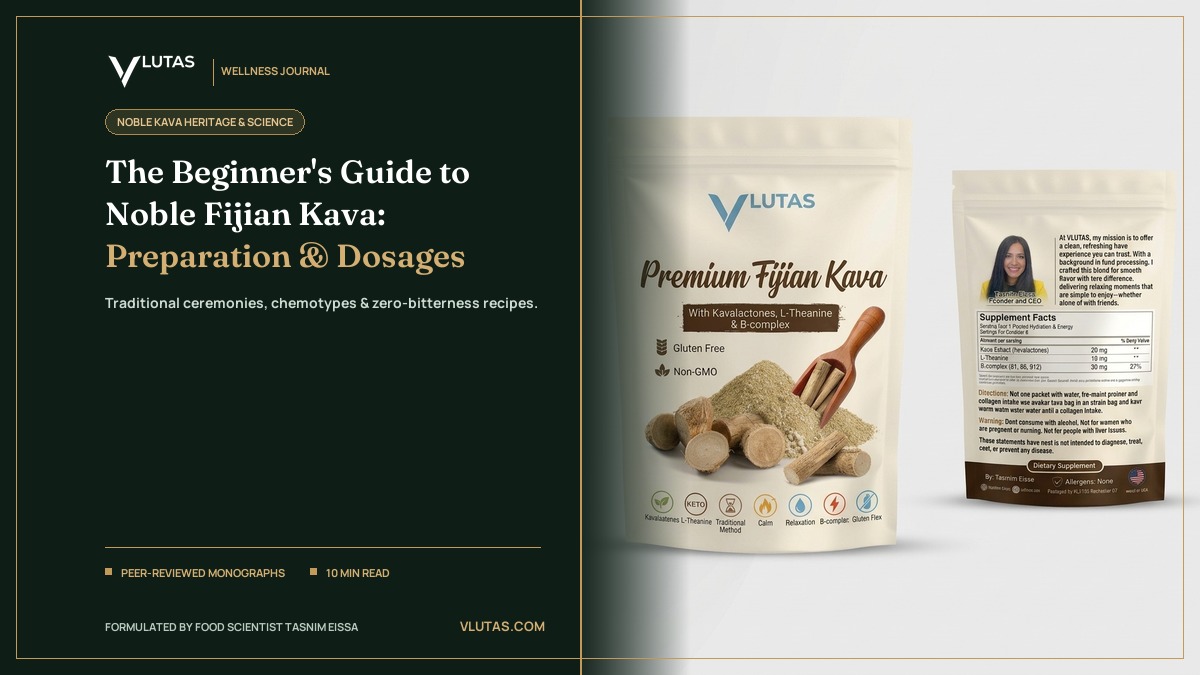
Pure Fijian Noble Kava — Zero Bitterness Guaranteed
Experience the authentic calm of 100% Fijian Noble Kava root (14% kavalactones) formulated with natural botanical extracts and soluble acacia fibre. No messy straining bags, no earthy grit, no morning brain fog.
3. Step-by-Step Preparation Protocol: Traditional vs. Modern Methods
Kavalactones are lipophilic (fat-soluble) resinous compounds bound tightly within root fibers. They cannot simply be dissolved like instant coffee; they require physical agitation to form an emulsion in liquid.
The Traditional Kneading Method (Ceremonial Preparation)
- Measure Your Root: Place 15 to 20 grams of medium-grind noble Fijian kava root into a 75-micron synthetic strainer bag.
- Prepare the Liquid Base: Fill a wide bowl with 8 to 12 oz of cool or lukewarm water (never boiling, as excessive heat degrades delicate kavalactones). Adding 1 to 2 tablespoons of coconut milk provides natural fats that accelerate kavalactone extraction by up to 25%.
- Submerge & Knead: Submerge the strainer bag and massage the root vigorously beneath the water for 5 to 8 minutes. You will feel the liquid transform into a rich, milky, golden-tan emulsion.
- Wring Dry: Squeeze the bag until almost dry. Pour the extracted beverage into a half-coconut shell (bilo) or ceramic cup.
The Modern No-Bitterness Method (VLUTAS Single-Serve Sachets)
Traditional preparation is deeply rewarding on weekends, but impractical during busy workweeks or travel. VLUTAS solves this through precision food engineering:
- Empty one pre-measured sachet of VLUTAS Fijian Kava into a shaker cup or glass.
- Add 8 to 10 oz of chilled water, oat milk, or coconut water.
- Shake or stir for 30 seconds. The soluble acacia prebiotic matrix holds the active kavalactones in a silky suspension, masking earthy bitterness with clean, refreshing flavour notes.
4. Safe Kava Dosage Guidelines for Beginners
Because botanical sensitivity varies, starting with an intentional, measured dose ensures an enjoyable first experience:
| Experience Level | Standardised Kavalactones | VLUTAS Serving | Primary Experience & Target Context |
|---|---|---|---|
| Beginner (Day 1–3) | 100 mg – 150 mg | 1 sachet (8–10 oz liquid) | Gentle shoulder tension release, conversational ease, mild lip tingling. |
| Intermediate | 150 mg – 250 mg | 1 to 1.5 sachets | Deep somatic muscle relaxation, mental quiet, restorative transition into sleep. |
| Ceremonial / Deep Calm | 250 mg – 300 mg | 2 sachets (spaced 45 min apart) | Complete parasympathetic nervous system reset; ideal for weekend unwinding. |
Expert Formulator Tip: Always consume kava on a relatively empty stomach (at least 2 to 3 hours after a heavy meal). Food delays gastric emptying and slows kavalactone absorption across the intestinal wall, blunting the calming response.
5. Top 4 Beginner Mistakes to Avoid
- Not Understanding “Reverse Tolerance”: Unlike alcohol, which builds rapid metabolic tolerance, kava frequently exhibits reverse tolerance. If you feel minimal effect on your very first trial, your neural receptors may require 2 to 4 consecutive days of exposure before the full calming and euphoric effects unlock.
- Combining Kava with Alcohol: Never mix kava with alcoholic drinks. Both substances are processed via cytochrome P450 hepatic pathways; consuming them concurrently places unnecessary strain on liver clearance and dulls kava’s pristine mental clarity.
- Using Boiling Hot Water: Hot water breaks down the delicate volatile aromatic kavalactones, rendering the drink excessively harsh and diminishing potency. Stick strictly to cold, room temperature, or lukewarm water.
- Drinking Substandard Non-Noble Roots: Purchasing cheap, non-standardised kava powders from unregulated marketplaces risks ingestion of Tudei cultivars, aerial stems, or mold contaminants. Always insist on lab-tested noble root with transparent COAs.
Curious how kava impacts athletic performance and weight training? Check out our sports recovery guide on can kava enhance muscle growth and workout recovery or explore our buyer’s guide on how to find your perfect relaxing drink.
6. Frequently Asked Questions (FAQ)
Why does kava make my mouth and tongue tingle?
The mild, temporary numbness on your tongue, lips, and throat is the hallmark of genuine, high-potency kava. It is caused by active kavalactones interacting with localized sodium ion channels in oral mucosal tissue. The sensation is completely safe and dissipates naturally within 10 to 15 minutes.
Can I drink noble Fijian kava every evening?
Yes, certified noble kava has a proven multi-thousand-year safety history in South Pacific communities. When used responsibly at recommended daily intakes (under 250 mg kavalactones daily) without alcohol, it serves as a healthy, non-habit-forming evening ritual for stress relief.
How is VLUTAS different from traditional bitter kava?
Traditional kava has a strong, pungent, muddy taste that many find difficult to stomach. VLUTAS pairs 100% Fijian noble root (standardised to 14% kavalactones) with organic acacia fiber and clean botanical flavor profiles, delivering all the physiological calm of a ceremonial brew with zero bitterness.
Scientific References & Clinical Monographies:
- Sarris, J., et al. (2013). Kava in the treatment of generalized anxiety disorder: a double-blind, randomized, placebo-controlled study. Journal of Clinical Psychopharmacology, 33(5), 643-648. PMID: 23635869.
- Cairney, S., et al. (2002). The neurobehavioural effects of kava. Australian and New Zealand Journal of Psychiatry, 36(5), 657-662.
- Showman, A. F., et al. (2015). A contemporary review of kava (Piper methysticum): safety, pharmacology, and botanical diversity. Phytotherapy Research, 29(4), 517-532.
- World Health Organization (WHO). (2016). Kava: a review of the safety of traditional and recreational beverage consumption. Food and Agriculture Organization of the United Nations.
FDA & Clinical Disclaimer: These statements have not been evaluated by the Food and Drug Administration. This content is for educational and informational purposes only and is not intended to diagnose, treat, cure, or prevent any disease. Always consult your physician or qualified healthcare provider before beginning any botanical or nutritional supplement regimen, particularly if you have preexisting liver conditions, take prescription medications, or are pregnant or nursing.